

By Captain Taylor Ovide, Backwater Expeditions, LLC
For much of my adult life, the Chesapeake Bay has been my workplace. Over the years I’ve worked in marine law enforcement, firefighting, emergency response, coastal resilience planning, and now as a captain and ecotour guide.
No matter the role, the water was always a constant. It was where I spent my days, where I learned some of life’s most important lessons, and ultimately the place that shaped how I see the world.
During my years in marine law enforcement, I logged thousands of hours underway on Virginia’s tidal rivers, creeks, and Chesapeake Bay waters. Some days involved boating safety inspections, checking commercial catches, or conversations with watermen at the dock. Other days involved investigations, emergency response, or long patrols through waterways that most people never have an opportunity to experience. I remember nights spent quietly patrolling the Bay, listening as much as watching. Out on the water, sound carries. Sometimes it was the distant rumble of a workboat heading home. Other times it was the unmistakable clank of an oyster dredge striking a culling board somewhere in the darkness when nobody should have been harvesting oysters.

Those years taught me to pay attention. Not just to people, but to the water itself. To the weather, the tides, the wildlife, and the subtle ways a place changes over time. Long before I understood terms like resilience or adaptation, the Chesapeake was teaching those lessons. Looking back, I realize many of the places that stayed with me weren’t famous destinations or places marked on a map. They were the places between destinations—a narrow creek disappearing into a marsh, a stretch of shoreline only accessible by water, or a quiet beach with no sign announcing its presence.
Later, my work took me in a different direction. As a coastal resilience planner, I spent years helping communities throughout Virginia’s Middle Peninsula respond to flooding, erosion, and changing shorelines. Once again, the Chesapeake became my classroom. I watched marshes migrate inland and shorelines that had existed for generations slowly disappear. I worked with homeowners, local governments, watermen, and conservation organizations, gaining an even greater appreciation for how connected everything is. The water, the wildlife, the fisheries, the marshes, the working waterfronts, and the communities that depend on them are all part of the same story.
Over time, I began to realize that most visitors never get to experience that side of the Chesapeake. They might visit a waterfront restaurant, spend an afternoon at the beach, or admire a lighthouse from the shore. Those experiences are worthwhile, but they only tell part of the story. To really understand the Chesapeake, you have to experience it from the water itself.
That realization eventually led me to start Backwater Expeditions. Not because I wanted to rent kayaks or operate boats, but because I wanted to share a perspective. I wanted to help people experience the Chesapeake the way I had come to know it over decades on the water.
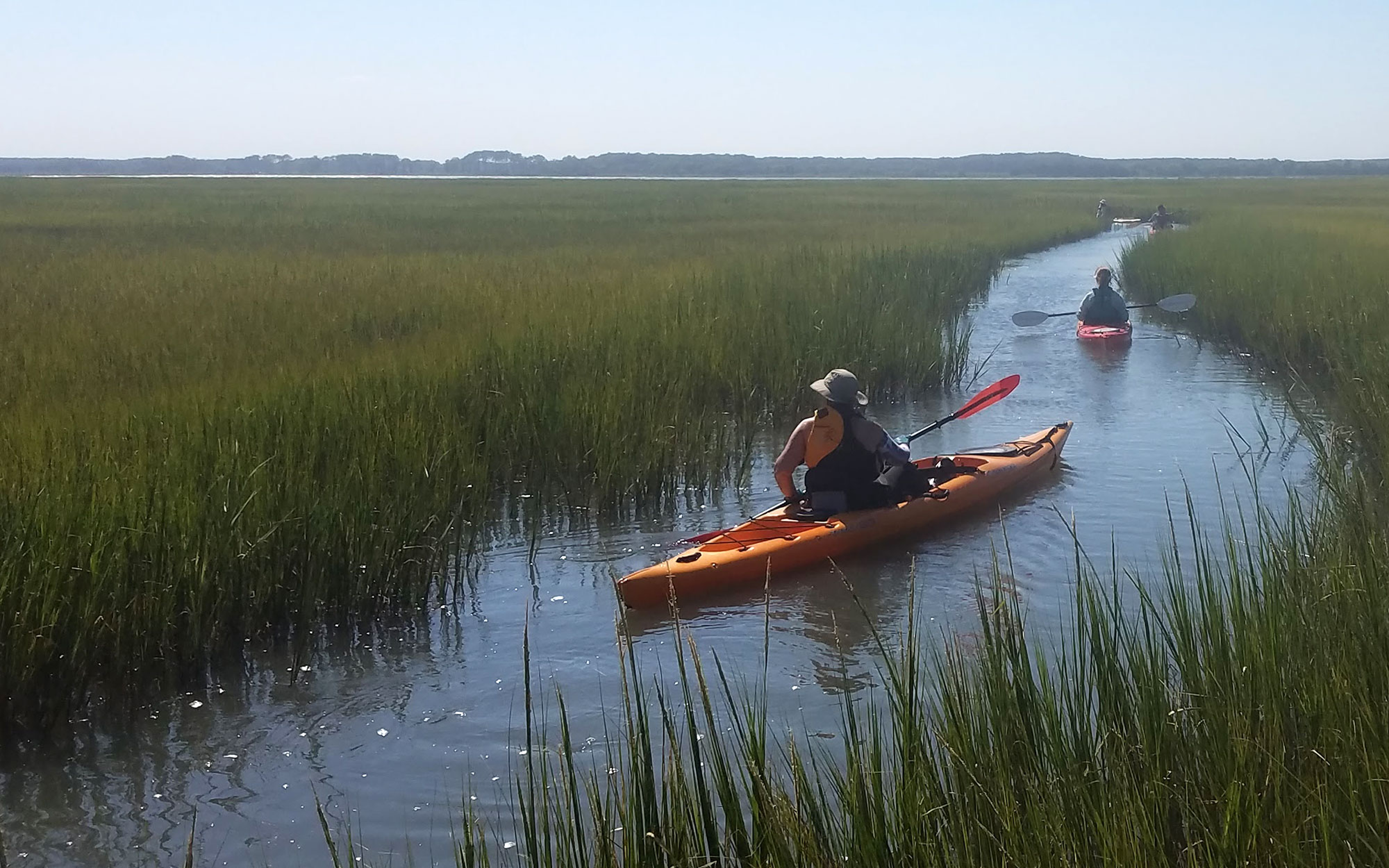
Today, that happens in a variety of ways. Sometimes it’s from a kayak quietly moving through a marsh creek where every bend reveals something new. Other times it’s aboard a traditional York River skiff, one of my favorite ways to explore. At seventeen feet long and powered by a modest 9.9-horsepower outboard, it won’t win any races, but that’s exactly the point. With its shallow draft and classic Chesapeake lines, it encourages a slower pace and opens the door to places larger boats simply can’t reach.
One of the things I love most about kayaks and small skiffs is that they force you to slow down. At that pace, you notice things. You hear marsh grass rustling in the wind. You spot an eagle before it leaves the nest. You see a ray glide across a shallow flat. You find yourself exploring a creek simply because you’ve never been there before. The destination becomes less important than the experience itself.

Over the years I’ve guided families, visitors, and local residents who have spent their entire lives near the water but never experienced it from this perspective. I’ve watched children become fascinated by horseshoe crabs, guests spot dolphins for the first time, and adults rediscover a sense of curiosity they hadn’t felt in years. My favorite moments are often the quiet ones, when the conversations stop and people simply take in what’s around them. The Chesapeake has a way of slowing people down if they let it.
That’s one of the reasons I appreciate Virginia’s water trails so much. They create opportunities for exploration and discovery while connecting people to the waterways that shape our communities. They encourage us to move at a different pace and experience Virginia from the perspective of the water.
After thousands of hours on these rivers, creeks, and bays, I still find myself discovering places I’ve never explored before. There’s always another shoreline, another creek, another story waiting around the next bend. That’s what keeps drawing me back. The Chesapeake Bay has been my classroom for most of my life, and I have a feeling it’s not finished teaching me yet.