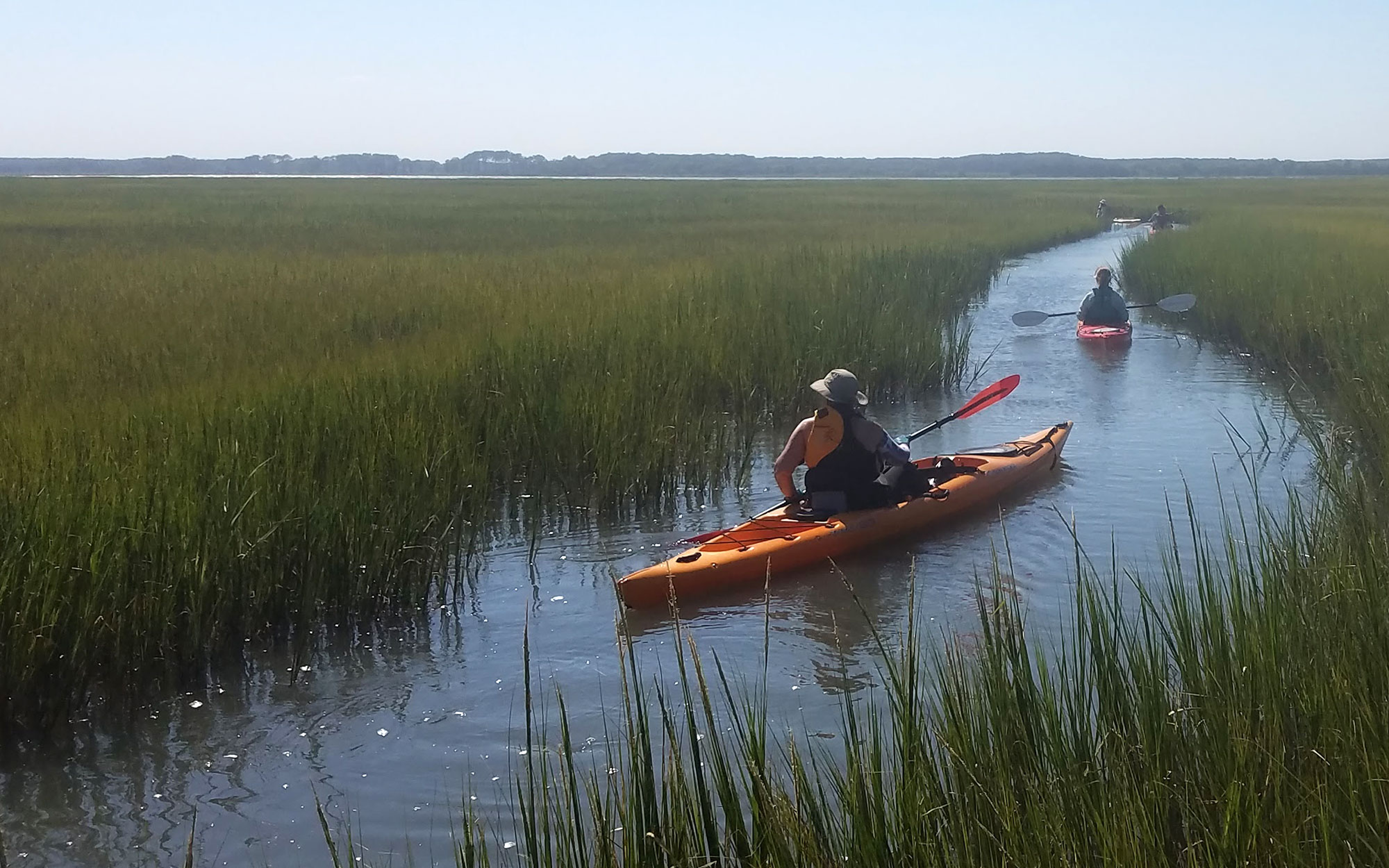


There’s a saying in rural coastal Virginia that the tide shapes everything — the land, the people, even the stories. Nowhere is that more true than in the Guinea Marshes, a breathtaking maze of winding wetlands.
Located on the southwestern shore of Mobjack Bay in Gloucester County, the Guinea Marshes is a prime example of the area’s scenic marshland. The area offers the opportunity to paddle, hunt the marshes, fish the surrounding waters or view a vast array of water and shore birds.
Predominantly tidal marshland and nearly 1,000 acres, all the marsh tracts are bordered by the waters of the Mobjack Bay, Browns Bay and several creeks, including Long Creek and Kings Creek.
The best part? It’s primarily in its natural state.
To paddle here is to step back in time. The Guinea Marshes are the kind of place that reveals their beauty slowly — not in grand vistas or sweeping cliffs, but in quiet details: the call of a heron lifting from the grasses, the ripple of a blue crab skimming beneath your kayak, the hush that falls when the only sound left is your paddle dipping into still water.
A Living Landscape

These marshes aren’t just scenic — they’re alive. The Guinea Marshes are part of one of the most expansive salt marsh systems on the Chesapeake Bay, serving as nurseries for fish, blue crabs, oysters, submerged aquatic vegetation and so much more. They filter the water that flows from the land, capture carbon and soften the blow of storm surges to nearby homes and working waterfront businesses that come with coastal life.
Kayaking through this ecosystem gives you a front-row seat to that delicate balance.
You’ll see grasses sway with the tide, watch ospreys dive for dinner and glide past shorelines that have supported generations of watermen who’ve made their living “working the water.”
A Waterman’s World
Guinea is steeped in maritime heritage — a place defined by independence, grit and a deep connection to the water. When you paddle through these marshes, you’re not just exploring a landscape; you’re moving through the lifeblood of a community. The narrow cuts and winding channels you navigate are the same routes still taken by boats loaded with crabs and oysters, headed for market.
Locals will tell you that the marsh teaches patience. The tide will always decide where you go and when you return. And in that rhythm — the rise, the fall, the stillness between — you’ll find a rare kind of peace that only comes from being part of something bigger than yourself.
Why Kayak Here

What makes the Guinea Marshes such a remarkable kayaking destination is their mix of beauty and accessibility. Launch from public access points you can find here and within minutes, you’re surrounded by a world that feels far removed from highways and noise.
Early morning and late evening paddles are especially magical, when the marsh glows gold and pink in the soft light, and the water reflects the sky like a mirror. Beginners will find gentle currents and plenty of protected waterways to explore, while more experienced paddlers can venture deeper into the winding maze toward the York River.
A Place Worth Protecting

The Guinea Marshes are more than a beautiful place to paddle — they’re a reminder of why coastal resilience matters. Rising seas and stronger storms threaten these wetlands and the communities that surround them. Programs like Fight the Flood are working to protect and restore marshes like these, recognizing that healthy wetlands are one of our greatest natural defenses against flooding and erosion.
So next time the tide is right, grab your paddle and set out into the Guinea Marshes. Let the water guide you. Breathe in the salt air. And remember that this place — quiet, wild and full of life — is both a gift and a responsibility to protect.