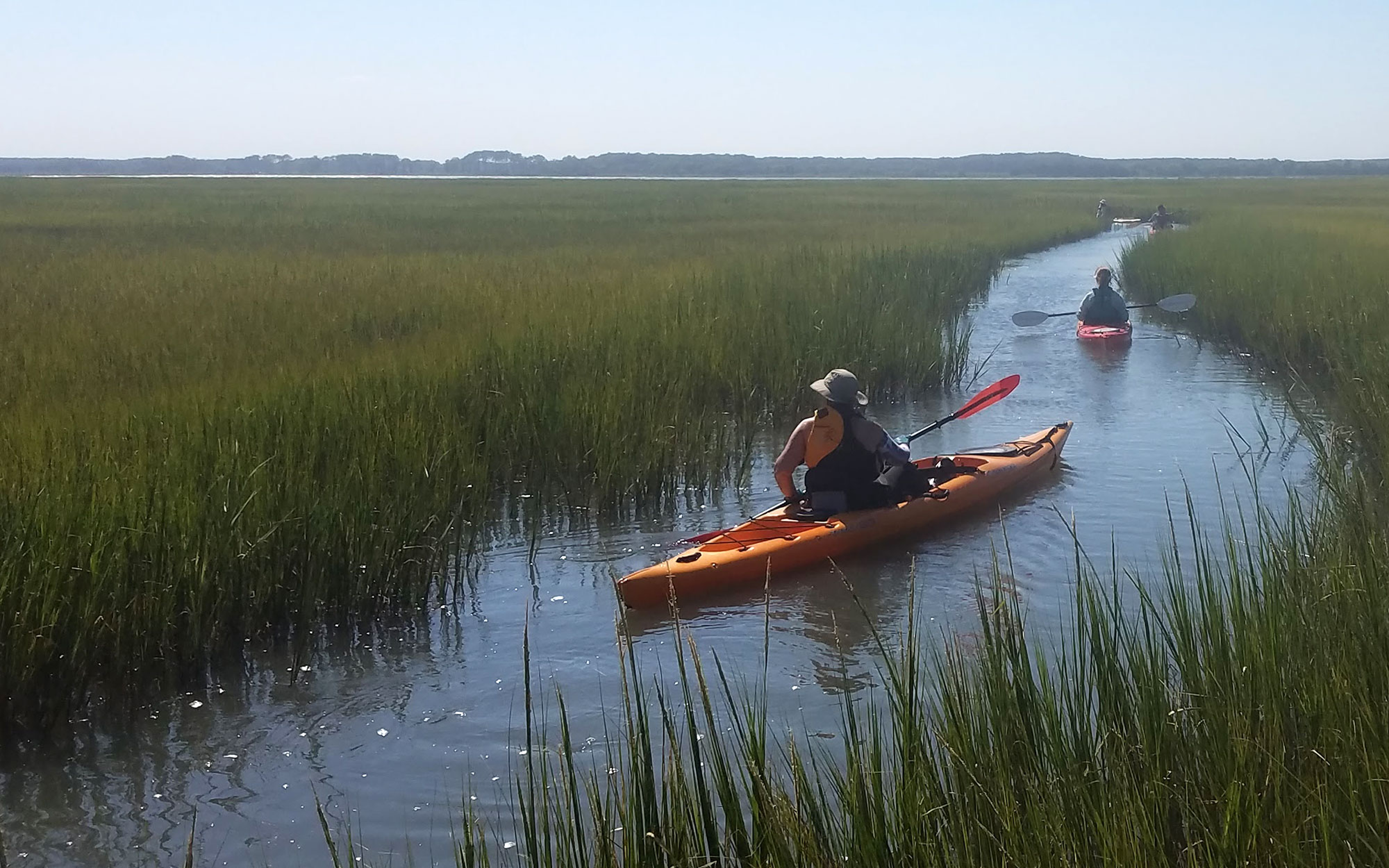


Somewhere between the splash of your paddle and the rustle of marsh grasses, a moment appears—a heron lifting off at sunrise, sunlight filtering through cypress branches, a still reflection that looks too perfect to be real. That’s the magic of bringing a camera on the water.
We asked professional photographer and award-winning photojournalist Rob Ostermaier to help us share some practical tips for paddling and photography on the Middle Peninsula, where he’s never disappointed when it comes to scenery and shots.
Start with the Right Setup
Rob’s number one rule for photography on the water? Protect your gear—and your balance.
“Keep your equipment in a waterproof bag while you’re paddling,” he says. “If you want to shoot, only do so while you’re drifting.”
Whether you’re using a DSLR, an action cam, or just your phone, make sure it’s secure and easy to access. The best moments—like an osprey swooping for fish or a school of rays gliding under the surface—happen fast. You won’t have time to dig through a dry bag.
Shoot for Stability (Even if You’re Floating)

Kayaks move. Water moves. Your hands move. So, how do you get crisp, clean photos out there?
Rob recommends choosing a stable kayak, especially if you’re using a larger lens. Monopods will also come in handy. But if you don’t have one, don’t worry! Brace your elbows against your body, keep your core engaged, and shoot in burst mode to increase your odds of a clear image. If you’re paddling with a friend, take turns—let one person hold steady while the other captures the scene.
Think Like a Photographer (Even if You’re a Paddler First)
Photography on the water isn’t just about pointing and shooting. It’s about light, layers, and knowing when the moment is right.
“The best time to shoot is early—sunrise to about 9 a.m.—or right before sunset,” Rob says. “The light is softer and the shadows are longer. Midday light is harsh, and it flattens everything out.”
Know What You’re Shooting For

You don’t have to come home with the perfect shot every time. Sometimes it’s about practicing—learning what works and what doesn’t.
Try setting small goals for yourself on each paddle: capture motion, practice reflections, or document how the light changes over an hour. Use landmarks to work on symmetry and color—especially in the fall, when golds and reds paint the shoreline.
Paddle, Pause, Repeat

Combining paddling and photography isn’t always convenient, but it is always worth it. You learn to see differently—both on the water and through the lens. And when you’re on the water on the Middle Peninsula, with its quiet creeks, tidal rivers, and abundant wildlife, it’s hard not to come away with something beautiful.
So pack your gear, load your kayak, and hit the water. Whether you bring back a photo or just the memory of a perfect stillness, you’ve captured something that matters.